

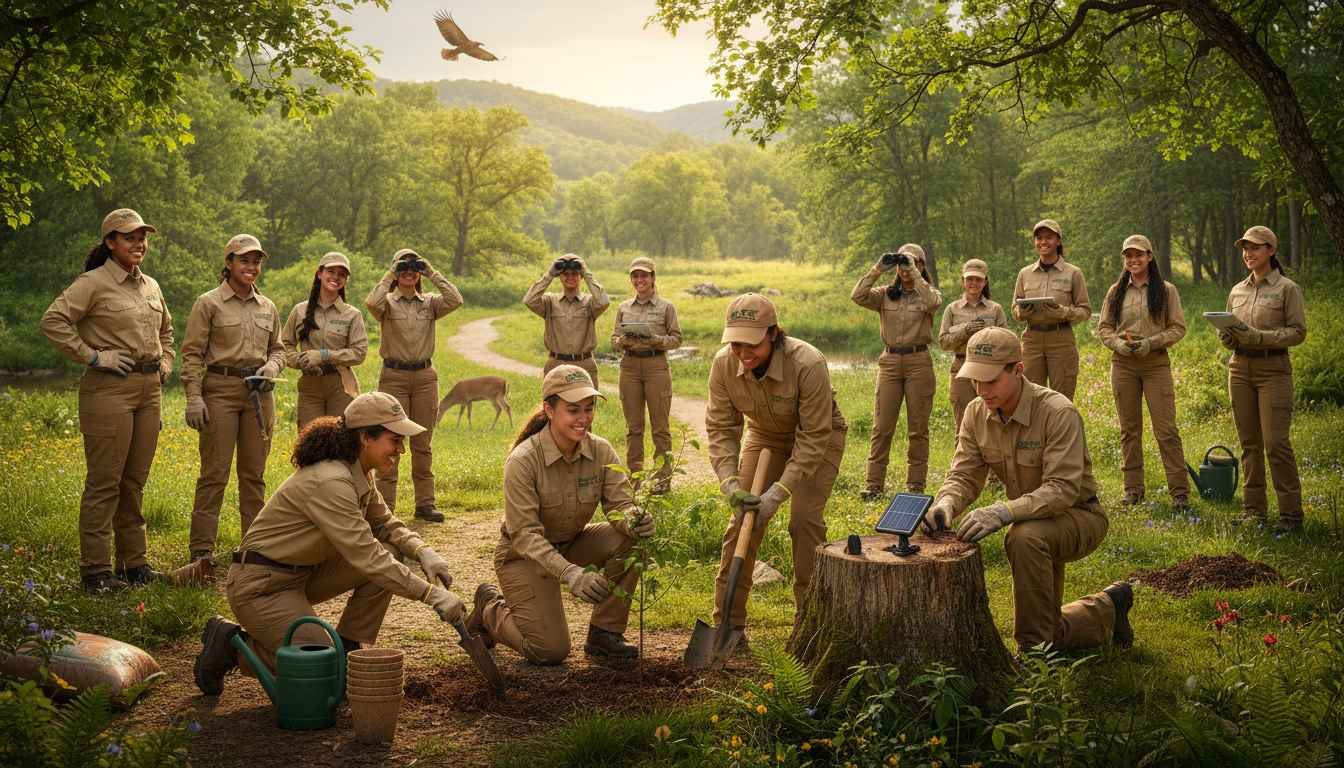
Imagine waking up tomorrow and stepping into a world where environmental education is immersive, hands-on, and deeply connected to the ecosystems it seeks to protect. The academy for conservation and the environment is more than a learning institution; it is a crucible for developing the next generation of conservationists who will balance human activity with ecological preservation.
Environmental challenges are increasingly complex, from climate change and habitat loss to pollution and biodiversity decline. Academic programs designed specifically for conservation combine field research, classroom instruction, and experiential learning to equip students with the knowledge and skills required to address these multifaceted issues. These academies serve as bridges between scientific research and practical application, ensuring that conservation efforts are informed by the latest empirical data.
At institutions like Dogwood Canyon Nature Park, students are not confined to traditional lecture halls. They engage directly with diverse ecosystems, participating in wildlife monitoring, habitat restoration, and ecological assessments. Such immersive experiences cultivate a sense of environmental responsibility that is difficult to achieve through theory alone. These programs also emphasize interdisciplinary approaches, integrating ecology, environmental policy, and sustainability practices.
Comparing Top Academies for Conservation and the Environment
Different academies emphasize various aspects of environmental education. The following comparison table highlights key factors prospective students might consider when selecting a program.
| Academy | Location | Program Focus | Hands-On Experience | Research Opportunities | Notable Features |
|---|---|---|---|---|---|
| Dogwood Canyon Conservation Academy | Missouri, USA | Wildlife biology, habitat restoration, sustainable management | Extensive fieldwork with local species and ecosystems | Collaborative projects with research scientists | 10,000-acre park setting, mentorship by expert ecologists |
| Yale School of the Environment | Connecticut, USA | Environmental policy, forestry, ecosystem management | Field stations and international conservation projects | Access to global research initiatives | Strong policy integration with practical science |
| Imperial College London Centre for Environmental Policy | London, UK | Environmental engineering, sustainable energy, conservation science | Laboratory and fieldwork in urban and natural ecosystems | Participation in climate and biodiversity studies | Focus on science-policy interface |
| University of Queensland Environmental Programs | Brisbane, Australia | Marine and terrestrial ecology, conservation management | Hands-on research at the Great Barrier Reef and rainforests | International research collaborations | Marine biology focus with global outreach |
Curriculum Structure and Learning Approaches
Most academies divide their programs into core modules and electives, often spanning topics such as ecology, environmental law, conservation genetics, and climate science. Field-based courses emphasize real-world application, requiring students to analyze ecosystems, track wildlife populations, and design conservation strategies. Elective courses often allow specialization, enabling deeper focus on marine biology, forest restoration, or sustainable agriculture.
Problem-based learning is a hallmark of these programs, encouraging students to identify environmental issues, hypothesize solutions, and implement pilot projects. This method enhances critical thinking, fosters teamwork, and ensures that graduates are not only knowledgeable but also capable of practical environmental intervention.
Did You Know?
The Ozark region, home to Dogwood Canyon Nature Park, contains over 1,000 species of plants and animals, including several that are rare or endangered. This biodiversity makes it an ideal living laboratory for conservation students to study ecosystem dynamics firsthand.
Potential Drawbacks and Considerations
While these academies provide unparalleled training, they are not without challenges. Field-based programs can be physically demanding, requiring long hours outdoors in variable weather conditions. Some programs also have high tuition costs, which may limit access for certain students. Additionally, the interdisciplinary nature of the curriculum can be intense, requiring proficiency in both scientific methodology and policy analysis.
Prospective students should also consider the career pathways post-graduation. While conservation offers meaningful work, opportunities can be geographically limited or dependent on governmental and nonprofit funding. Understanding these constraints is crucial when committing to a rigorous program.
Measuring Impact and Career Outcomes
Academies for conservation and the environment often track graduate success through placements in research institutes, environmental nonprofits, and government agencies. Metrics include the number of published research papers, participation in conservation projects, and career advancement within ecological or sustainability roles. Programs with strong field components and partnerships with organizations like Dogwood Canyon Nature Park tend to produce highly employable graduates due to their applied skills and professional networks.
Technological Integration in Conservation Education
Modern conservation academies integrate technology to enhance research and monitoring. GIS mapping, drone surveys, and bioacoustic monitoring are commonly taught, enabling students to collect and analyze environmental data efficiently. Such tools not only improve research accuracy but also prepare students for careers where technological literacy is increasingly essential.
Community Engagement and Outreach
Beyond field research, effective programs emphasize community engagement. Students participate in local environmental education, public outreach, and citizen science projects. By connecting with communities, academies foster broader awareness and support for conservation initiatives, reinforcing the societal importance of environmental stewardship.
Choosing the Right Academy for You
When evaluating options, prospective students should consider several criteria: program specialization, fieldwork opportunities, faculty expertise, research partnerships, and overall location. Institutions like Dogwood Canyon provide immersive natural settings ideal for hands-on learning, whereas urban or global-focused programs may offer more policy or engineering exposure. Aligning personal interests and career goals with program strengths ensures that students maximize the benefits of their education.
Ultimately, an academy for conservation and the environment serves not only as an educational institution but as a transformative experience, preparing students to meet the pressing environmental challenges of the 21st century.