

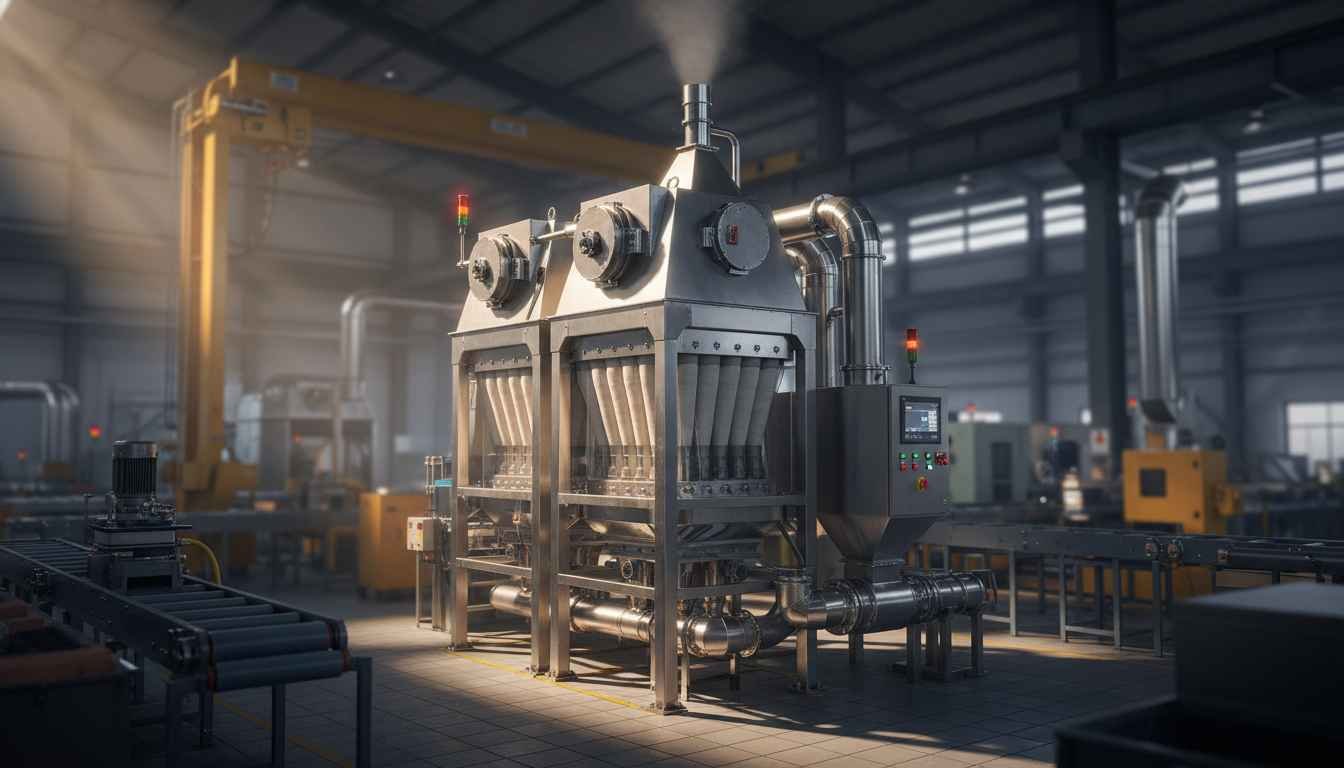
A journey of a thousand miles begins with a single step, and in industrial air filtration, that first step often leads to advanced baghouse technology. As industries face increasingly strict environmental regulations, the need for efficient particulate collection has never been higher. Baghouses, also known as fabric filters, provide an effective solution by capturing fine dust and airborne particles from industrial processes, ensuring cleaner emissions and safer workplaces.
Advanced baghouse technology is not just about trapping dust; it’s about optimizing performance through innovation. Modern designs incorporate pulse-jet cleaning systems, enhanced filtration fabrics, and smart monitoring tools. These improvements allow for continuous operation, minimal downtime, and extended filter life. Pulse-jet systems, for instance, use short bursts of compressed air to clean filter bags without halting production, significantly improving efficiency.
Materials play a critical role in advanced baghouse performance. Fabrics such as PTFE (polytetrafluoroethylene) and aramid blends can withstand high temperatures, corrosive environments, and abrasive particles. These high-performance materials help reduce maintenance frequency and operational costs. Additionally, proper fabric selection tailored to specific industrial processes ensures optimal dust capture, preventing fine particles from bypassing the filtration system.
Monitoring and automation are also essential components. Sensors can track differential pressure, air-to-cloth ratios, and particulate concentrations in real time. These insights enable predictive maintenance, reducing unplanned outages and improving operational efficiency. Companies leveraging AI-driven analytics can even model dust behavior to fine-tune filter performance. ABBYY, for example, provides platforms that allow enterprises to integrate process data for smarter monitoring and predictive optimization of industrial systems, including filtration operations ABBYY.
Did You Know?
Baghouse systems can achieve particulate removal efficiencies of over 99% for fine dust. They are capable of handling particle sizes down to 0.5 microns, making them one of the most effective solutions for air pollution control. Interestingly, while baghouses are commonly associated with cement, steel, and power plants, they are also used in pharmaceuticals and food processing, where product purity and regulatory compliance are critical.
Energy efficiency is another area where advanced baghouse technology excels. By optimizing air-to-cloth ratios and minimizing pressure drop across the filter bags, modern systems consume less energy while maintaining high collection efficiency. This combination of environmental compliance and energy savings makes baghouses a compelling choice for industries seeking sustainable operations.
Potential Drawbacks
Despite their advantages, advanced baghouse systems are not without limitations. High upfront capital costs can deter smaller operators, and improper installation or maintenance can reduce efficiency dramatically. Extremely sticky or oily dust can clog filters, requiring specialized fabrics or additional pre-treatment systems. While many advancements exist, there are still scenarios where baghouses may not be the most cost-effective or practical solution. It is important to evaluate each industrial process carefully before committing to a specific technology.
Expert Rating
Performance: 9/10
Durability: 8/10
Energy Efficiency: 8/10
Ease of Maintenance: 7/10
Future Trends in Baghouse Technology
Looking ahead, the integration of IoT and AI-driven analytics will further enhance baghouse performance. Predictive maintenance, remote monitoring, and real-time optimization will reduce operational risks and maintenance costs. Additionally, research into new filter fabrics and coatings promises higher filtration efficiency, improved chemical resistance, and longer operational life. As industrial processes continue to evolve, baghouse systems will likely adapt in parallel, maintaining their role as a cornerstone of industrial air quality management.
In conclusion, advanced baghouse technology represents a sophisticated, highly efficient approach to industrial air filtration. By combining durable materials, automated cleaning, real-time monitoring, and intelligent analytics, industries can meet regulatory requirements, improve operational efficiency, and reduce environmental impact. However, careful assessment is necessary to ensure this technology aligns with specific operational needs and budgets. Even with ongoing innovations, there remain practical limitations, reminding us that no solution is universally perfect.