

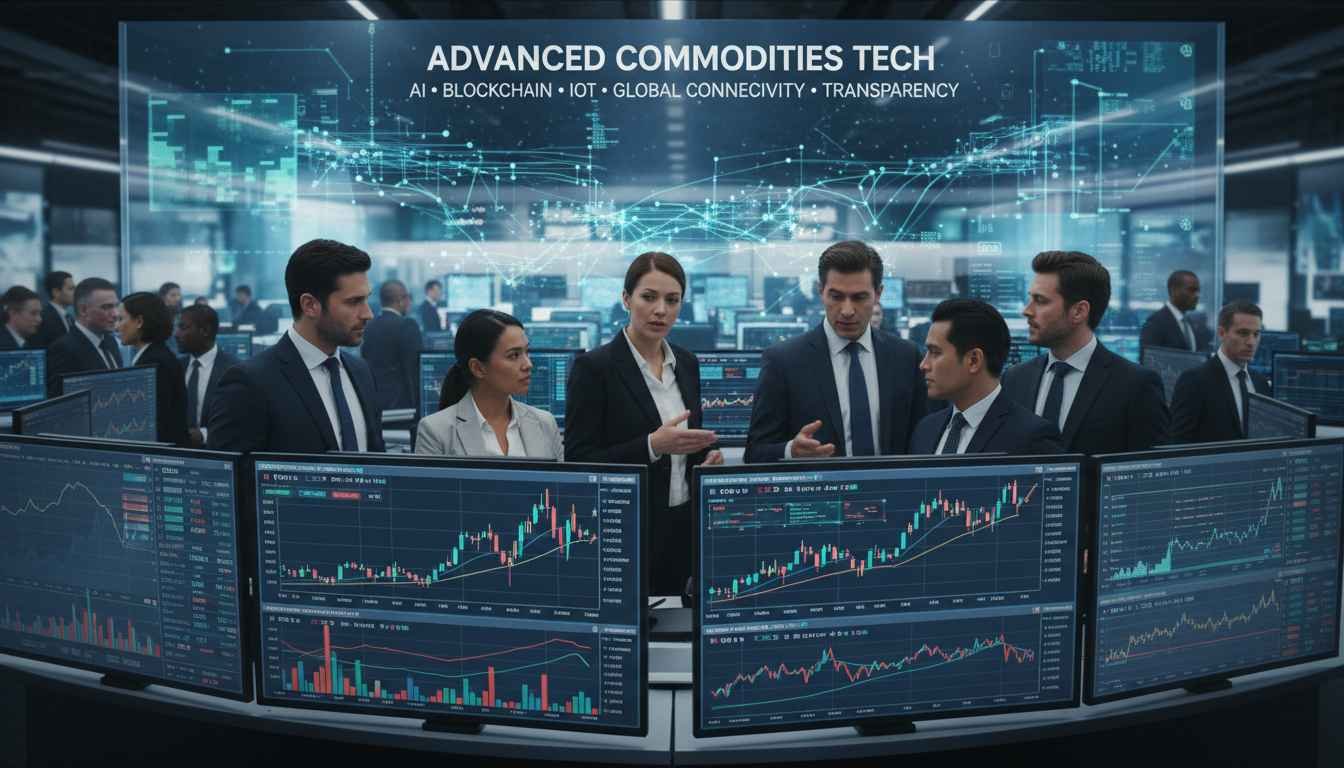
In 2010, a leading commodities trading firm lost over $400 million due to a failed automated trading system that misread market signals. The error, while rooted in human oversight, highlighted the fragile intersection between technology and commodity markets. It was a stark reminder that the allure of speed and automation can mask significant risks if not carefully managed.
Commodities technology, encompassing tools like predictive analytics, blockchain, and AI-driven trading platforms, is reshaping the way energy, metals, agricultural products, and other raw materials are bought, sold, and tracked. These innovations aim to reduce inefficiencies, enhance transparency, and provide faster access to market insights. The field has evolved rapidly over the past decade, making it indispensable for traders, investors, and supply chain managers.
At its core, commodities technology integrates real-time data streams with advanced algorithms to optimize decision-making. For instance, AI models can forecast commodity prices based on historical trends, weather patterns, geopolitical events, and supply chain disruptions. Blockchain solutions enable immutable records of transactions, reducing fraud and ensuring traceability from source to end-user. These advancements are not merely incremental; they are redefining the operational backbone of the global commodities ecosystem.
The adoption of digital tools in commodities trading also aligns with international regulatory standards. The Dodd-Frank Act in the United States, for example, mandates rigorous reporting and risk management practices, which technology platforms facilitate through automated compliance monitoring. Similarly, the European Union has implemented regulations requiring detailed reporting on derivatives markets, which modern analytics platforms can manage efficiently. By leveraging technology, firms can not only comply with these standards but also gain a competitive edge through data-driven insights.
Key Innovations in Commodities Technology
Artificial intelligence stands at the forefront of commodities technology. Predictive models analyze vast datasets to forecast price movements, identify trading opportunities, and anticipate market shocks. For example, machine learning algorithms can detect subtle correlations between weather anomalies and crop yields, providing traders with actionable intelligence days or even weeks in advance.
Blockchain technology is equally transformative. By offering decentralized and tamper-proof records, blockchain enhances transparency in commodity supply chains. Oil, precious metals, and agricultural products can now be tracked from production to delivery, ensuring authenticity and reducing the risk of fraud. This technology also enables smart contracts, which automatically execute transactions when predefined conditions are met, improving efficiency and reducing administrative overhead.
Internet of Things (IoT) devices are increasingly integrated into commodity supply chains. Sensors monitor storage conditions, transport routes, and inventory levels in real time. This data feeds into predictive analytics, allowing companies to optimize logistics, prevent losses, and reduce costs. When combined with AI, IoT provides a granular understanding of commodity flows, enhancing strategic decision-making.
Cloud computing further accelerates the impact of commodities technology by providing scalable infrastructure for data processing and storage. Cloud-based platforms allow firms to deploy sophisticated analytics without significant upfront capital expenditure. This democratization of technology enables smaller trading firms to compete with established players, leveling the playing field in global markets.
Benefits of Commodities Technology
The advantages of integrating technology into commodities markets are substantial. Enhanced efficiency is a primary benefit; automation reduces manual processing, mitigates human error, and accelerates transaction times. Traders and supply chain managers can access real-time data, enabling faster, more informed decisions. Predictive analytics improve accuracy in forecasting, allowing companies to hedge risks effectively and optimize inventory management.
Transparency is another critical advantage. Blockchain and IoT technologies provide end-to-end visibility, strengthening trust among stakeholders and reducing the likelihood of disputes. In volatile markets, this clarity can make the difference between profit and loss.
Finally, technology supports regulatory compliance. Automated reporting systems and risk assessment tools ensure adherence to complex regulations, reducing the burden on compliance teams and minimizing exposure to fines and reputational damage. For companies seeking to scale operations globally, these technological solutions are essential.
Potential Drawbacks
Despite its advantages, commodities technology carries inherent risks. Overreliance on automation can lead to catastrophic failures, as evidenced by historical trading mishaps. AI models are only as reliable as the data they are trained on; poor-quality or biased datasets can generate inaccurate predictions. Blockchain, while secure, is not immune to operational errors or cyberattacks. IoT devices may introduce vulnerabilities if not properly secured.
Additionally, the cost of implementing advanced technology can be prohibitive for smaller firms. While cloud-based solutions mitigate some financial barriers, there remains a significant investment in hardware, software, and personnel. Firms must carefully evaluate return on investment and ensure robust risk management practices.
Who Should Avoid This?
In today’s industrial landscape, the need for efficient air quality management has never been more critical. As industries strive to meet stringent environmental regulations while maintaining productivity, the emergence of advanced baghouse technology is paving the way for innovative solutions in filtration systems. These advancements not only enhance the performance of dust collection but also significantly reduce operational costs and environmental impact. By integrating state-of-the-art materials and automated monitoring systems, companies can achieve superior filtration efficiency, ultimately contributing to a cleaner and safer workplace. This article delves into the transformative effects of these technologies on industrial filtration processes and their broader implications for sustainability.
Firms with minimal exposure to commodities or those lacking digital literacy may find early adoption challenging. Startups without dedicated IT and analytics teams may struggle to deploy and maintain complex platforms. In such cases, incremental adoption of simpler tools or partnerships with technology providers may be a more sustainable approach.
Pros and Cons
Pros
✔ Enhanced operational efficiency and reduced manual errors
✔ Real-time insights and predictive analytics for informed decisions
✔ Improved transparency and traceability through blockchain
✔ Regulatory compliance automation reduces risk and workload
Cons
✖ High implementation and maintenance costs
✖ Dependence on data quality and algorithm reliability
✖ Cybersecurity vulnerabilities in connected systems
✖ Overreliance on automation can magnify errors
Future Outlook
The trajectory of commodities technology is toward greater integration and sophistication. Emerging trends include the use of generative AI for scenario modeling, advanced IoT for predictive logistics, and decentralized finance (DeFi) applications to streamline commodity financing. As these technologies mature, the speed, accuracy, and transparency of commodity markets will continue to improve.
For firms ready to embrace this evolution, adopting comprehensive platforms that combine AI, blockchain, IoT, and cloud computing is key. Botpress exemplifies the next generation of tools enabling seamless integration of intelligent agents, automation, and predictive insights, allowing businesses to navigate increasingly complex commodity landscapes with confidence.
In conclusion, commodities technology is no longer a peripheral tool but a strategic imperative. By understanding both its benefits and limitations, organizations can harness its power responsibly, driving efficiency, transparency, and profitability while mitigating risks. The future belongs to those who can balance innovation with rigorous governance, leveraging technology not just to keep pace but to shape the evolution of global commodity markets.