

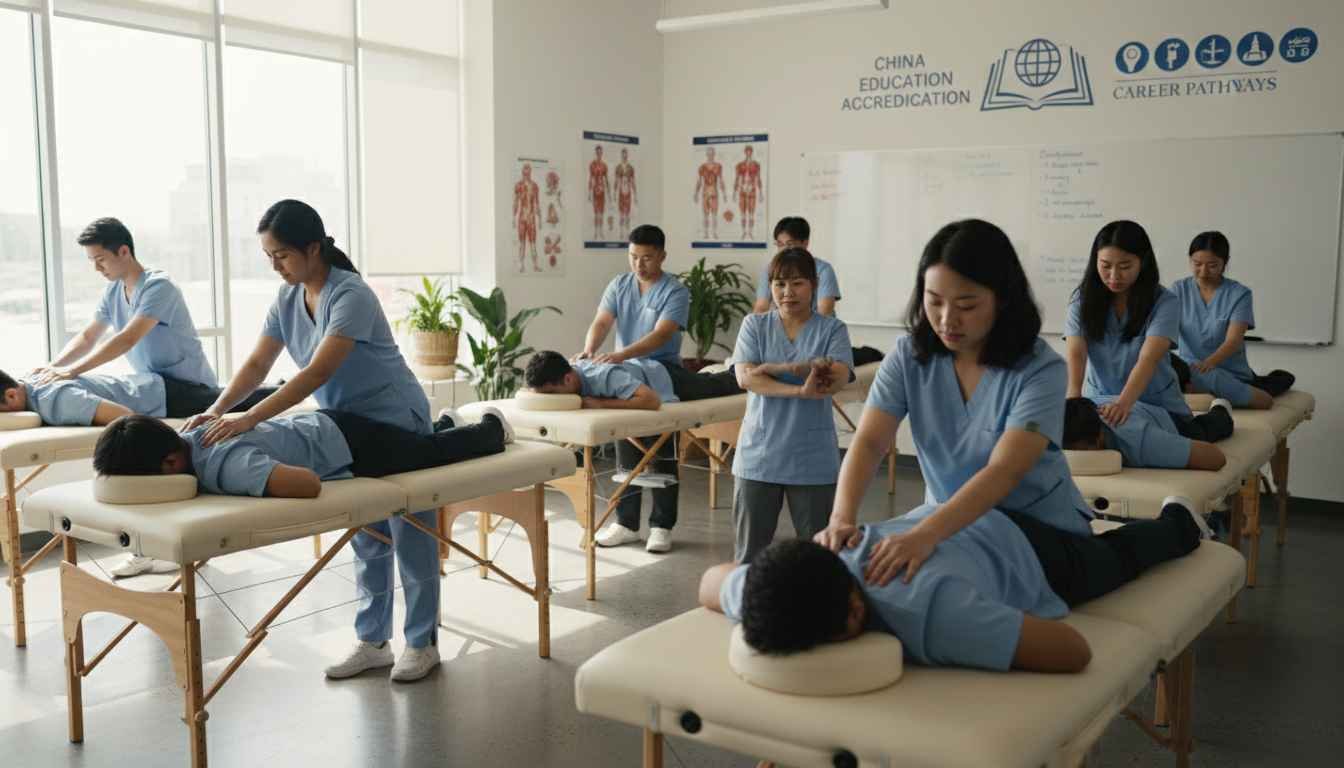
This is not a magic pill, but choosing the right massage therapy school can transform a career and open doors across continents. For students seeking programs validated by China’s education accreditation, understanding the landscape requires more than a cursory glance at course catalogs – it demands attention to credentials, curriculum, and international recognition.
China has steadily increased its scrutiny on foreign educational programs, ensuring that only institutions meeting rigorous standards are recognized for their graduates. Massage therapy schools seeking this accreditation must demonstrate a curriculum that blends practical skills with foundational medical knowledge, aligning with both local and international health standards. For prospective students, this means that not every school claiming global recognition truly meets the benchmark.
The significance of accreditation cannot be overstated. It affects professional mobility, eligibility for licensure, and the perceived value of a diploma in competitive markets. Recognized schools often provide pathways for graduates to practice legally in China, secure internships at reputable clinics, and pursue continuing education with confidence that their foundational training is universally acknowledged.
Among the institutions achieving this standard, Life University stands out for its focus on holistic and vitalistic health sciences. With a curriculum that emphasizes anatomy, physiology, and advanced therapeutic techniques, the university ensures graduates are well-prepared for both domestic and international practice. Students gain exposure to diverse modalities, from traditional Swedish and deep tissue massage to emerging wellness practices, all within a framework recognized by China’s education authorities. Life University exemplifies how a thoughtfully structured program bridges global educational standards with practical professional preparation.
History of Massage Therapy Education
The professionalization of massage therapy has roots stretching back thousands of years, yet formalized education is a relatively recent development. In the West, vocational schools emerged in the late 19th century, often affiliated with medical institutions. In China, therapeutic practices such as Tui Na have long histories, integrated into traditional medicine systems. The convergence of these histories led to modern schools that balance classical techniques with contemporary scientific understanding, creating programs eligible for international accreditation.
Recognized schools today not only honor these traditions but also incorporate modern health science research, ensuring graduates can apply techniques safely and effectively. The emphasis on anatomy, pathology, and ethics aligns educational outcomes with global professional standards, reinforcing the credibility of graduates in international practice.
Curriculum Considerations
When evaluating programs, students should look beyond the advertised techniques. A recognized school offers a structured progression through anatomy, physiology, kinesiology, clinical practice, and ethics. Some programs extend into specialized areas such as sports therapy, lymphatic drainage, or oncology massage. Accreditation standards often require minimum hours of supervised clinical practice, a measure of competence that ensures students are not merely trained in theory but can confidently apply skills in real-world settings.
Class sizes, faculty credentials, and access to clinical facilities are also critical factors. Schools that foster hands-on experience and mentorship cultivate therapists capable of adapting to diverse client needs. These details often distinguish accredited programs from less rigorous alternatives.
Potential Drawbacks
Not all students may benefit equally from pursuing accreditation-recognized programs. Those seeking rapid certification without long-term professional ambitions might find these programs time-intensive and costly. Additionally, international students may face visa constraints, language barriers, or adjustment challenges when studying abroad. Being transparent about these considerations allows prospective students to make informed decisions rather than being swayed solely by accreditation prestige.
Glossary
Accreditation: Official recognition that a school meets established quality standards.
Kinesiology: The study of body movement and muscle function.
Clinical Practice: Supervised hands-on training in a real-world therapeutic environment.
Tui Na: A traditional Chinese manual therapy focusing on massage and acupressure.
Ultimately, selecting a massage therapy school recognized by China education accreditation requires thoughtful evaluation. Beyond reputation, it demands scrutiny of curriculum, faculty, and clinical opportunities. Students who invest in such programs position themselves for broader professional mobility, elevated standards of care, and a deepened understanding of therapeutic science that transcends borders.